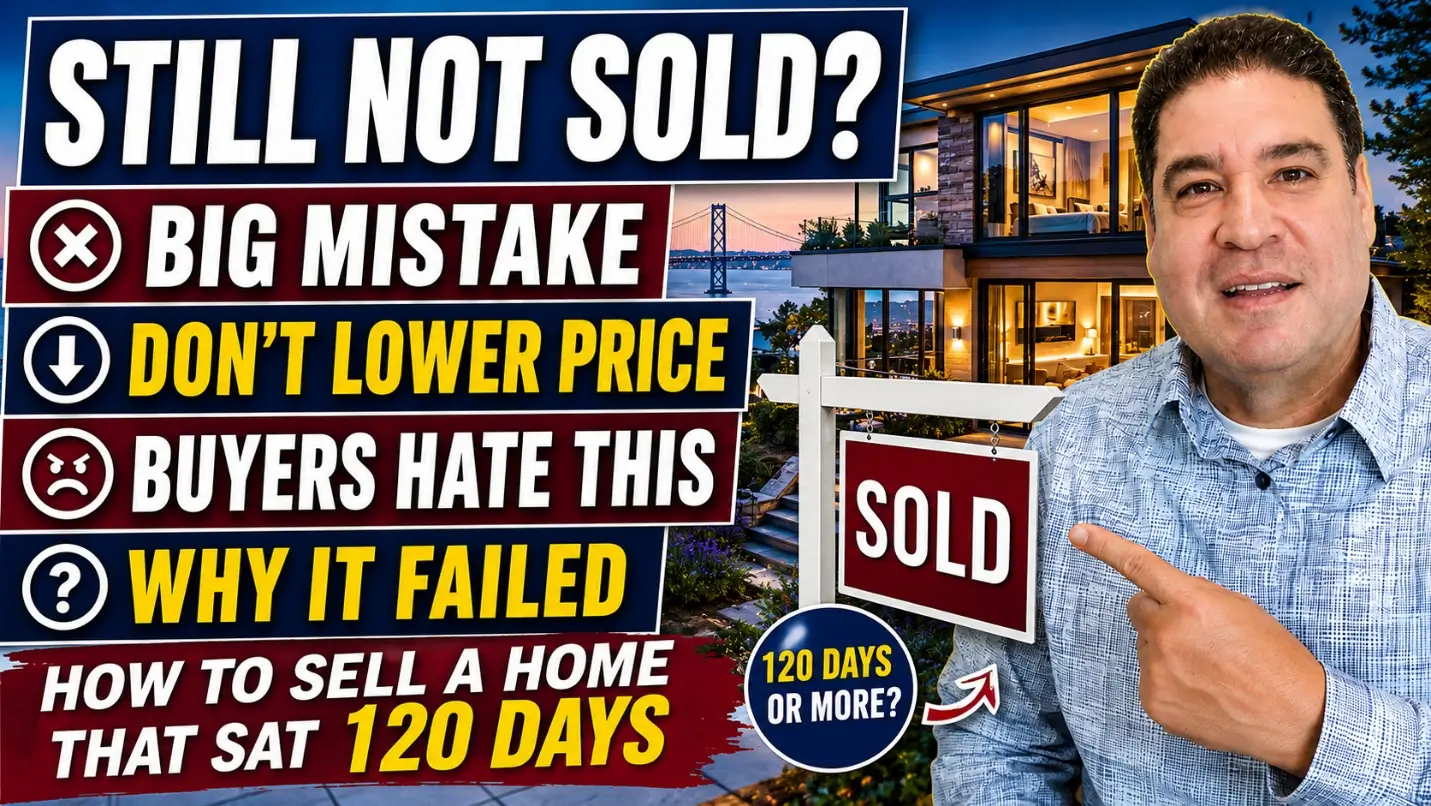

Ten seconds is all it takes to say no.
A buyer walks in, glances around for ten seconds, and already knows she’s not making an offer. Here’s what usually happens in those ten seconds.
It’s rarely the big things, the layout, the location, the bones. It’s usually a presentation issue, something fixable that nobody flagged before the listing went live.
Here are the 12 presentation problems I see most often. Stick around because #12 is the leading cause of failure that I see most.
1. Personal Photos and Collections Everywhere
Buyers need to picture their own life in the space. A home full of family photos and personal items makes that harder, no matter how nice the decor is.
2. Furniture That Blocks Sightlines
A couch or table positioned in front of the main sightline makes a room feel smaller and choppier than it is. Buyers read that as cramped, even when the square footage says otherwise.
3. Overly Bold or Mismatched Paint Colors
A striking accent wall might be your favorite feature. For buyers, it’s one more thing to imagine repainting before they can imagine living there. In addition, with the exception of bathrooms, try to paint the entire interior a neutral color, such as an off-white or cream color.
4. Dim or Mismatched Lighting
Dark corners and inconsistent bulb tones make a home feel older and less cared for than it actually is. This is one of the fastest, cheapest fixes with a high-impact.
5. Cluttered Countertops and Surfaces
Even tidy clutter reads as “not enough storage” to a buyer’s eye. Clear surfaces make a home feel more spacious and better maintained.
6. Overstuffed Closets
Buyers open closets. A packed closet quietly signals a lack of storage, even in homes with plenty of it.
7. Odors
Pet smells, strong cooking odors, or heavy air freshener trying to cover something up, all register instantly and work against the home before a buyer sees a single room.
8. Outdated Fixtures
Old light fixtures, faucets, and cabinet hardware are inexpensive to replace but disproportionately affect how “updated” a home feels overall. Paint fixtures if cost is an issue.
9. Poor Curb Appeal
Buyers form an opinion before they’re out of the car. A tired lawn, a faded front door, or a cluttered porch puts buyers in a critical mindset before they’ve even walked in.
10. Small, Unfixed Maintenance Issues
Squeaky doors, chipped paint, a loose cabinet handle. None of these are dealbreakers individually. Stacked together, they create a feeling of neglect that buyers can’t quite name but definitely notice.
11. Listing Photos That Don’t Match Reality
If your photos oversell the space and reality undersells it, buyers feel misled the moment they walk in, and that feeling colors the rest of the showing.
12. Rooms Without an Obvious Purpose
A vague “flex space” with no clear function forces buyers to do extra mental work. Every room needs to make sense at a glance. Consider transforming an unused space to a “mini-office.”
Why These Small Things Matter So Much
None of these issues are about your home being flawed. They’re about the gap between how a home actually is and how it feels to a buyer walking through it for the first time, often comparing it to four or five other homes they toured that same weekend.
As you can see, none of these improvements cost much.
Buyer Psychology Behind This List
Buyers rarely reject a home for one big reason. More often, several small issues compound into a general feeling that something’s “off,” and that feeling gets attached to price, even when price isn’t the actual cause. This is why fixing presentation issues sometimes moves a stalled listing more effectively than a price cut does.
Mistakes Sellers Commonly Make
- Assuming presentation problems are too minor to matter
- Fixing one or two items and stopping, when the issue is usually several stacked together
- Not getting an outside opinion, since it’s genuinely hard to see your own home the way a stranger does (can be another real estate agent).
- Reaching for a price reduction before ruling out presentation as the real cause
Where This Leaves You
If your home has been sitting, it’s worth an honest look at how many of these twelve apply. Most are inexpensive to fix. The hard part is usually just seeing them, since it’s difficult to notice in your own home what a buyer notices instantly.
If you’d like a second set of eyes on this, I’m happy to walk through your home and give you a straight, specific list of what’s working and what isn’t. No pressure, just an honest read from someone who’s staged, flipped, and sold homes for years. If you want a no-cost Listing Rescue Evaluation consultation, type RESCUE ME in the comments.
————————————————————–
Has your San Francisco Bay Area home been sitting on the market without receiving the buyer interest you expected? Sometimes the reason a home doesn’t sell has less to do with the property itself and more to do with how buyers experience it.
In this video, I’ll walk you through the 12 most common presentation problems that can prevent homes from making a strong impression on buyers and what homeowners should consider before deciding on their next step.
Buyers often make quick judgments when they walk through a home. Factors like layout, clutter, lighting, furniture placement, condition, and overall presentation can influence how they perceive the property’s value.
In this video, you’ll learn:
• Common staging and presentation issues that may distract buyers
• Why first impressions can influence a buyer’s emotional connection with a home
• How clutter, furniture arrangement, and outdated presentation can affect buyer perception
• Which improvements may help your home show more effectively without major renovations
• How to evaluate your home from a buyer’s perspective before putting it back on the market
After working with buyers, sellers, and investment properties, I’ve learned that understanding buyer psychology is one of the most valuable tools a homeowner can have.
Many sellers see their home through the eyes of someone who has lived there for years. Buyers see it differently—they are trying to imagine whether the home fits their lifestyle, needs, and future plans.
The goal of improving presentation is not to guarantee a sale or suggest that every home needs the same changes. It is about identifying possible obstacles and making informed decisions based on how buyers may respond to the property.