
Beware of the Contractor Trap.
Before you hand a contractor $50,000 or more for a brand-new kitchen you will never get to enjoy, ask yourself why buyers are walking through your front door and walking right back out empty-handed.
Most contractors will try to persuade you to completely remodel your entire home. It’s important to understand that contractors are not professional real estate agents that don’t know what buyers want.
So, no. The goal is not to renovate everything. The goal is to identify the improvements that are the least costly and give buyers the strongest emotional reaction and the highest perceived value.
Start by understanding that the woman is almost always the decision maker in regard to which house to buy. Second, most women want a clean, updated home. That’s it. Paint and flooring are the two cheapest renovations. Not a $50,000 remodeled kitchen. Not a $50,000 swimming pool. Not a $50,000 man-cave.
Full kitchen remodels lose money at resale. Freshly painted garage doors make you money at sale. If you’re about to spend $50,000, you’re probably fixing the wrong thing.
The Data Doesn’t Support It
Every year, the Cost vs. Value Report tracks what home improvements actually return at resale. The pattern holds year after year: small, exterior, curb-appeal projects deliver the best return. Big interior remodels deliver the worst.
A garage door costs under $100 to paint and returns roughly $7,000 at resale. A minor kitchen update, new countertops, hardware, paint, typically pays back about 80% of what you spend. A full kitchen gut? Often loses money. Same with major additions. Same with pools.
If your home didn’t sell, the problem is rarely “not enough renovation.” It’s something else. And spending $50,000 to fix the wrong problem doesn’t just waste money. It delays your sale further while the work gets done.
What Actually Stalls a Sale
After 90+ days on market, the cause is almost always one of three things:
Price. The market has told you something, and the price hasn’t caught up. This isn’t about your home’s worth. It’s about what buyers are actually paying for comparable homes right now, this month, not six months ago when you first listed.
Presentation. Buyers decide in the first 5-10 seconds of a viewing a listing photo. If your home doesn’t have great photography, isn’t staged, or was staged once and never refreshed, that’s costing you showings before anyone even walks through the door.
Condition, not renovation. There’s a real difference between a home that needs updating and a home that needs fixing. A cracked walkway. A stained ceiling. Cluttered closets. These read as neglect to a buyer, even if the bones of the house are fine. None of this requires $50,000. Most of it requires a weekend and a few hundred dollars.
What I’d Actually Recommend
Before you spend a dollar on renovation, get a diagnosis-don’t simply guess. Not a generic checklist. An actual room-by-room read on what’s working against you and what it would cost to fix, with a real return estimate attached to each item.
That’s the difference between spending $50,000 hoping it helps, and spending $6,000 on the three things that are actually costing you buyers.
Here’s what I’d look at first, in order of return:
Exterior paint and curb appeal. Homes with strong curb appeal sell for meaningfully more than comparable homes with a tired exterior. This is the cheapest lever with the highest visibility, since it shapes your listing photos before a buyer ever sees the inside.
Staging. Full professional staging in the Bay Area runs $5,000-$10,000 for a vacant home, less if you’re living in the home. That’s a fraction of a renovation budget, and it directly addresses how buyers experience the space in photos and in person.
Small repairs. The list of items a buyer’s inspector will flag anyway. Fixing them now, on your terms, is cheaper than negotiating them off your price later. More importantly, if a buyer sees cracks in the walls, stains in the ceiling or an exposed wire, they automatically think the worst-that you have major foundation problems; major water damage or a new electrical system.
Pricing strategy. Sometimes the diagnosis isn’t physical at all. It’s a number. And no amount of renovation fixes a price that’s out of step with the market.
The Real Question
The question isn’t “how much should I spend?” It’s “what’s actually broken?” Those are different questions with very different price tags attached.
I’m a certified home stager and certified interior decorator, and I spent seven years flipping and buying houses as a broker. In addition, I spent seven years as a buyer’s agent. I picked the buyers’ minds to determine which improvements they most desire. I’ve seen what actually moves a stalled listing, and it’s rarely the $50,000 kitchen. It’s almost always something smaller, cheaper, and more specific than that.
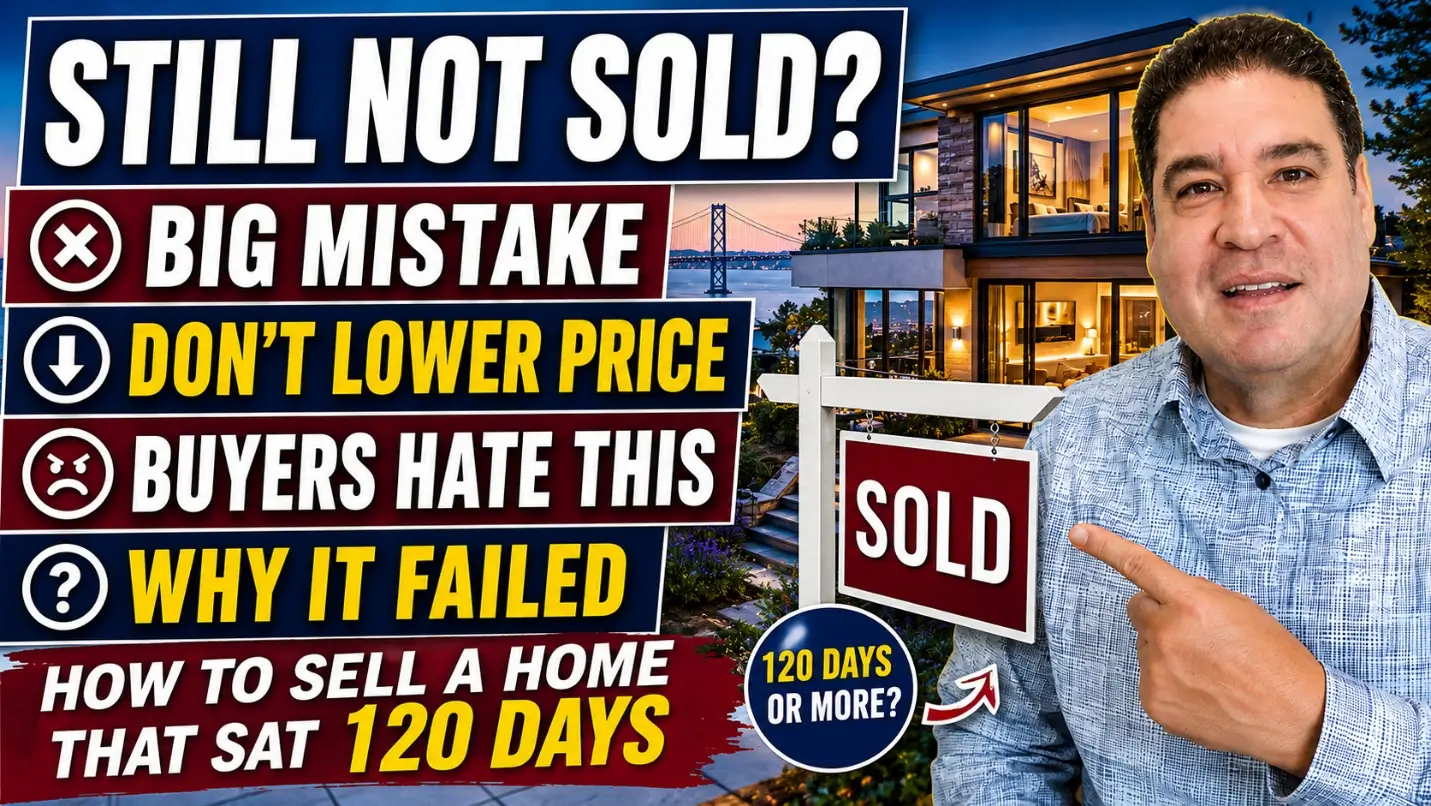
If your home has been sitting for 90 days or more, the fastest thing you can do isn’t to start a renovation. It’s getting a real answer for why it hasn’t sold yet.
That’s what a Listing Rescue Evaluation is for. A written, room-by-room diagnosis. What’s costing you buyers. What it costs to fix and what it’s worth fixing. If you want a no-cost Listing Rescue Evaluation consultation, type RESCUE ME in the comments.
—————————————-
If your home didn’t sell, it can be tempting to assume the answer is to renovate. Maybe the kitchen needs updating, the bathrooms look dated, or the flooring and paint aren’t as appealing as today’s buyers expect.
But before spending $50,000—or even $5,000—it’s worth asking a more important question:
What is actually preventing the home from selling?
A renovation can improve a property, but it doesn’t automatically solve a pricing, presentation, positioning, or marketing problem. In some cases, a homeowner could spend tens of thousands of dollars on improvements that buyers appreciate but aren’t willing to pay enough to justify the expense.
This article looks at how to determine whether your home truly needs renovations, which improvements may have the greatest impact, and when smaller, lower-cost changes could make more sense.
Sometimes the answer is a $50,000 renovation.
Sometimes it’s a $5,000 improvement.
And sometimes, you don’t need to renovate at all.