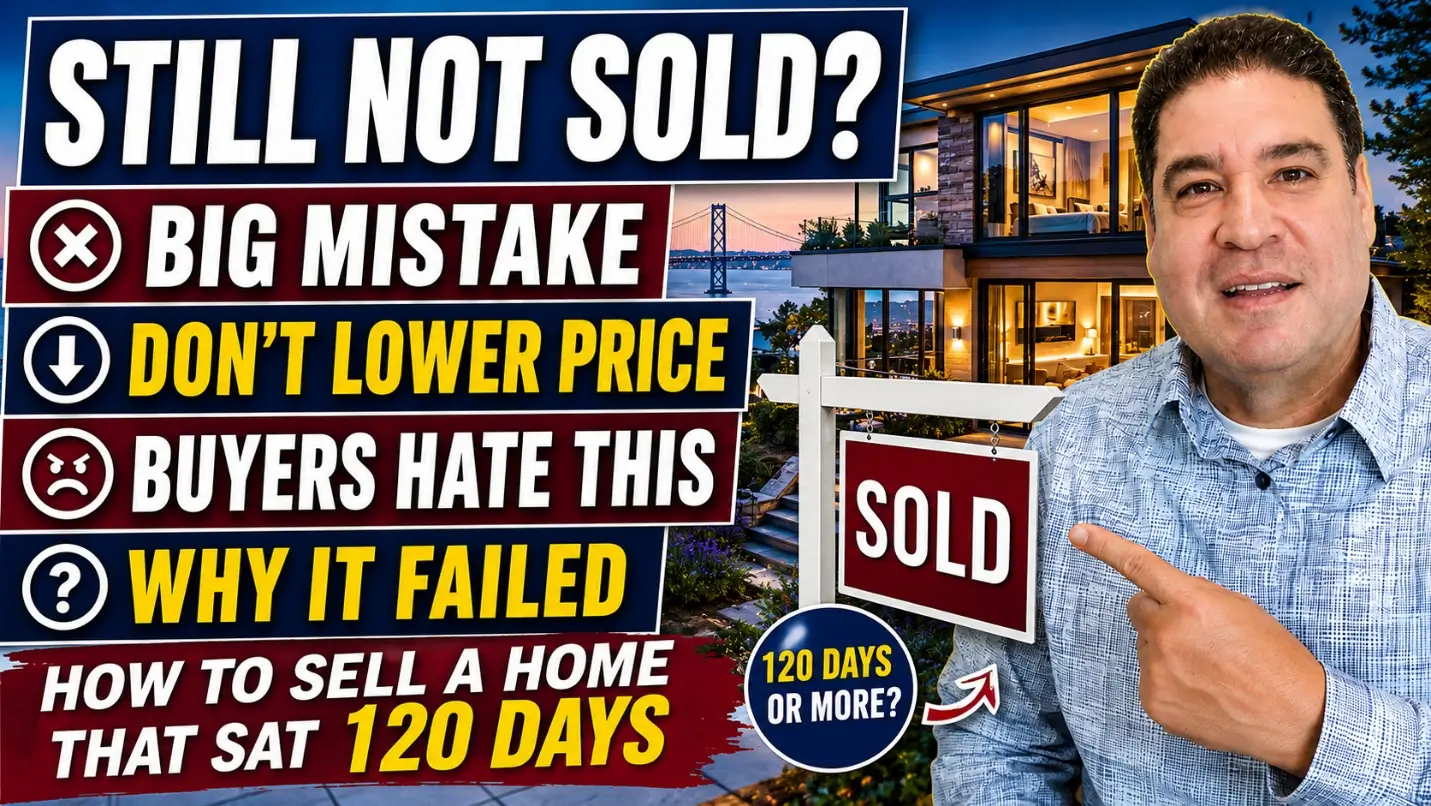

Don’t lower your price until you hear this!
Lowering your price when price isn’t the issue can cause grave consequences. You’ll net $10,000-$20,000 less and the problem will still exist!

You’ve been on the market for 100+ days. You’re tired, frustrated, and starting to wonder if you’re just going to have to eat the loss. So, you drop the price. Maybe you drop it again.
And still, nothing happens.
Here’s what nobody tells sellers: a price cut only works if price was the actual problem. And after six years flipping houses and seven years working with buyers as their agent, I can tell you, price is often the symptom, not the disease. Cure the disease, and you should instantly see traffic.

Why “Just Lower It” Feels Like the Answer
Lowering the price is the easiest move to make. It doesn’t require staging, repairs, or hard conversations. One phone call, one MLS update, done.
It’s also the stock answer when buyer are not interested: “it’s overpriced.” But buyers say that about homes for all kinds of reasons that have nothing to do with the number on the listing. Subconsciously, they know that something’s wrong, so, to protect themselves from overspending, they’ll give you their stock answer, “it’s too much money.”
A home that’s over-priced by $10,000 is only about $83 a month more. Do you really think every prospect can’t afford $83 a month more?
I’ve watched buyers walk through a home, say nothing negative out loud, then tell their agent afterward, “not for the price.” What they meant was the kitchen felt dated, or the layout was confusing, or the home just didn’t feel worth stopping for. Price became the catch-all excuse.

What’s Actually Driving the “It’s Overpriced” Reaction
1. Buyers are comparing your home to updated ones nearby.
If comparable homes have newer kitchens, refinished floors, or fresh paint, and yours doesn’t, buyers aren’t measuring you against your original purchase price. They’re measuring you against the competition down the street. A price cut without addressing that gap just makes your home appear in the mind of buyers as the “cheap outdated one” instead of the “fairly priced updated one.”
2. The condition doesn’t match the price, even after you dropped it.
I’ve seen sellers cut $30,000 off a listing and still get no offers, because the real issue was a home that showed poorly. Buyers weren’t rejecting the price. They were rejecting what they saw when they walked in.
3. The listing has been sitting long enough to raise questions.
Buyers pay attention to days on market. Past a certain point, they start asking “what’s wrong with it?” or, “if the home was that good, someone would’ve bought it by now,” even when nothing is wrong. A second or third price drop can actually reinforce that suspicion instead of solving it.

A Story from My Flipping Days
I once looked at a house that had two price reductions and zero offers. The seller assumed it just needed to go lower again. Walking through it, the price wasn’t the issue. The main bathroom had a leak stain on the ceiling that had been there for months. Every buyer who saw it assumed the worst, plumbing issues, water damage, mold, and left without saying a word about the price.
The fix cost a few hundred dollars. The next price reduction the seller was considering would have cost tens of thousands.
That’s the pattern I see most often. Sellers treat price as the lever because it’s the one they can control from home, without hiring anyone or fixing anything. But it’s rarely the actual lever buyers are responding to.
Common Mistakes Sellers Make Here
- Reducing price before getting an honest read on condition and presentation
- Assuming buyer silence means “too expensive” instead of investigating further
- Making cosmetic excuses (“buyers just don’t like the color”) instead of testing the theory
- Reducing price in small increments repeatedly, which can signal desperation more than it corrects the actual issue
How to Tell the Difference
Ask yourself:
- Have buyers toured the home multiple times but not made offers? That’s usually a condition or presentation issue, not price.
- Are you getting almost no showings at all? That’s more likely a pricing or marketing visibility issue.
- Did an offer come in, then fall apart during inspection? That’s a condition issue that a price cut won’t fix.
The pattern of buyer behavior tells you more than the number on the listing does.
Where This Leaves You
A price reduction isn’t wrong. Sometimes it’s exactly the right move. But cutting price without knowing why buyers are passing is a guess, and guesses are expensive when they’re wrong.
What’s not expensive is doing it right the first time-performing a diagnostic test and finding out the real problem.

If your home has been sitting and you’re not sure whether the issue is price, presentation, or something buyers aren’t saying out loud, I’m happy to walk through it with you and give you a straight read. No pressure, just an honest second opinion from someone who’s been on both sides of this, as a stager, a flipper, a buyer’s agent and a diagnostic agent. If you want a no-cost Listing Rescue Evaluation, type RESCUE ME in the comments.
—————————————————————-
Has your San Francisco Bay Area home been sitting on the market and you’re wondering if lowering the price is the only solution? Before making a price reduction, it’s important to understand whether price is actually the problem—or whether other factors may be affecting buyer interest.
In this video, I’ll explain why some homes don’t sell even when the price seems reasonable and why a successful selling strategy involves more than simply reducing the asking price.
Price is an important factor in attracting buyers, but it is only one part of the equation. Buyers also consider presentation, condition, marketing, competition, timing, and how well a home connects with their needs and expectations.
In this video, you’ll learn:
• Why lowering the price is not always the first or only solution
• How buyer perception can affect whether a home receives offers
• The relationship between pricing, presentation, and market positioning
• Common mistakes sellers make when trying to correct a listing that isn’t selling
• Questions to ask before deciding whether a price adjustment makes sense
After working with buyers, sellers, and investment properties, I’ve learned the importance of looking at a home from the buyer’s perspective. Sometimes the issue is pricing, but other times there may be opportunities to improve how the home is presented or marketed.
For homeowners whose properties have been on the market for 90–180 days, the goal should be to diagnose the situation before making another major decision. Understanding what buyers are responding to can help you choose your next step with more confidence.
This video is designed to help you evaluate your options and make informed decisions based on your specific situation—not to suggest that there is one solution for every home.